
Crisis leadership in the face of viral social media disinformation
by Tony Jaques, Director of Issue Outcomes Pty Ltd, for people who work in issue and crisis management
Should a company CEO speak out publicly about an internet allegation which doesn’t even name his brand?
That was the dilemma just weeks ago when an anonymous Reddit user published a long post claiming dishonest practices being perpetrated against employees and customers of an unnamed food delivery company.
The supposed whistleblower claimed to be an engineer who worked on a secret algorithm for an app intended to cheat delivery workers out of legitimate income. The post quickly amassed 87,000 upvotes and about 5,000 comments on Reddit.
When a screengrab was posted on X with the arrestingly profane caption “Holy F***ing Sh*t“ it generated over 200,000 views and almost 40 million impressions.
Many comments were predictably angry, including one from actor John Cleese: “A perfect example of the mindless greed that is sucking generosity and kindness from the American psyche.”
Trust as a competitive advantage against misinformation
Read it here
Although the post did not name the company allegedly involved, CEO Tony Xu of DoorDash – the largest operator in the US – made the decision to get involved. In a post on X he wrote: “Holy f***ing sh*t is right! This is not DoorDash, and I would fire anyone who promoted or tolerated the kind of culture described in this Reddit post.”
The company’s corporate X account followed up: “To be clear, this Reddit post isn’t about DoorDash. Given how differently we operate, we thought we’d take a moment to share what our approach is actually like.” It linked to a 680-word website statement rebutting every allegation point by point.
The same day, Andrew Macdonald, president and chief operating officer of Uber, weighed in: “I am responsible for Uber Eats. This post is definitively not about us. I suspect it is completely made up. Don’t trust everything you read on the internet.”
It soon became evident that the original post was a well-planned hoax. Journalists contacted the anonymous Redditor, who provided them with an AI-generated image of an Uber Eats employee badge (nothing like the real thing) and an 18-page purported confidential internal study supporting the allegations. That also proved to be an AI-generated fabrication. Four days after publication the offending post was deleted.
While it was a brief episode, there are some important lessons for issue and crisis managers and other communicators. First and most significant is that, even as a hoax, it undoubtedly caused real reputational damage, providing a forum for thousands of disgruntled users, employees and conspiracy theorists to vent in public about their complaints and concerns.
It also demonstrated the lightning speed with which the story spread from social media to mainstream publications. The DoorDash public affairs officer commented: “You have to be able to respond quickly and tell your story to the millions of people who are reading the disinformation.”
Moreover, the hoax was cleverly crafted to play into broader public skepticism about algorithms and the gig economy in general. That gave it apparent credibility based on the recent history of DoorDash and other apps. For example, in February 2025 DoorDash paid $16.75 million to settle a claim they withheld tips from New York drivers. And a report in October 2025 claimed Amazon was using AI to improperly monitor drivers and steal wages – claims the company disputed.
Against that backdrop, even though his company was not named, it is no surprise that the DoorDash CEO chose to speak out, deliberately echoing the same profane language in his response for maximum impact, rather than retreating behind lawyer-approved corporate-speak. Nor is it surprising that Uber Eats management felt compelled to follow suit.
Both companies certainly did the right thing. That is not to suggest that organizations should respond to every online accusation or reputational attack. But as DoorDash itself said: “The awful claims in this post clearly hit a raw nerve.”
A Parting Thought
“Don’t assume that all internet conspiracies are doomed to be blown away by the leaf-blower of history.”
– David Mitchell
Learn more about Reputation Risk, CEO apologies, and Crisis communication in Tony Jaques’ book,
Crisis Counsel: Navigating Legal and Communication Conflict
Click HERE to find Tony’s book at Amazon.com
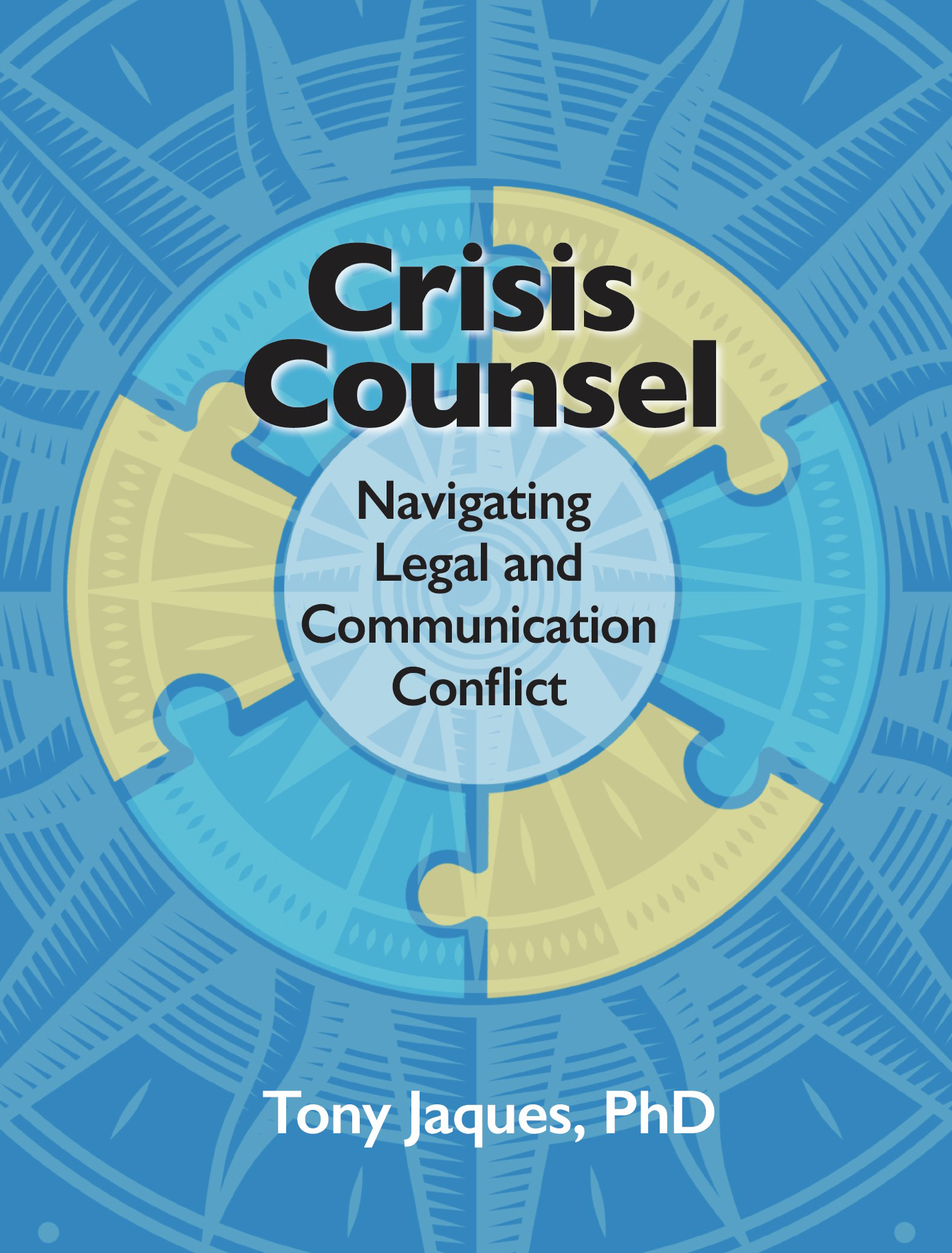
“Crisis Counsel confirms Tony Jacques’ position as one of the industry’s foremost experts on issues and crisis management. In addressing the complex interactions between legal and communication crisis responses, Dr. Jacques provides riveting case studies and practical advice. It highlights the financial and reputation risks of not effectively integrating communications and legal counsel. It should be on every communications practitioner’s reading list, and companies should insist their in-house and external legal counsellors read it.” – Noel Turnbull, Former Chair of Turnbull Porter Novelli, Adjunct Professor, RMIT University.
#reputationrisk #reputationmanagement #issuemanagement #tonyjaques
